

My clearest memory of New Year's Eve is not the countdown. It is the soba.
In Japanese households, 年越し蕎麦, toshikoshi soba — year-crossing soba — is eaten just before midnight. The television is on, the year is ending, and there is a bowl of hot soba noodles in dashi broth in front of you. This happens reliably, in homes across the country, every December 31st. It is as fixed to the night as the bell strikes at temples.
Why soba, and why tonight
Soba noodles are long and thin — and in Japanese food symbolism, length carries meaning. Long noodles represent long life. Eating them on the last night of the year is both a wish for longevity in the year to come and a way of drawing a thread between the year that is ending and the one that is beginning. The noodles cross with you.
There is one condition: the soba should not be left unfinished. Cutting the noodles, or leaving them in the bowl, is considered bad luck — you would be cutting the thread before it has carried you through. You finish the bowl. You cross completely.
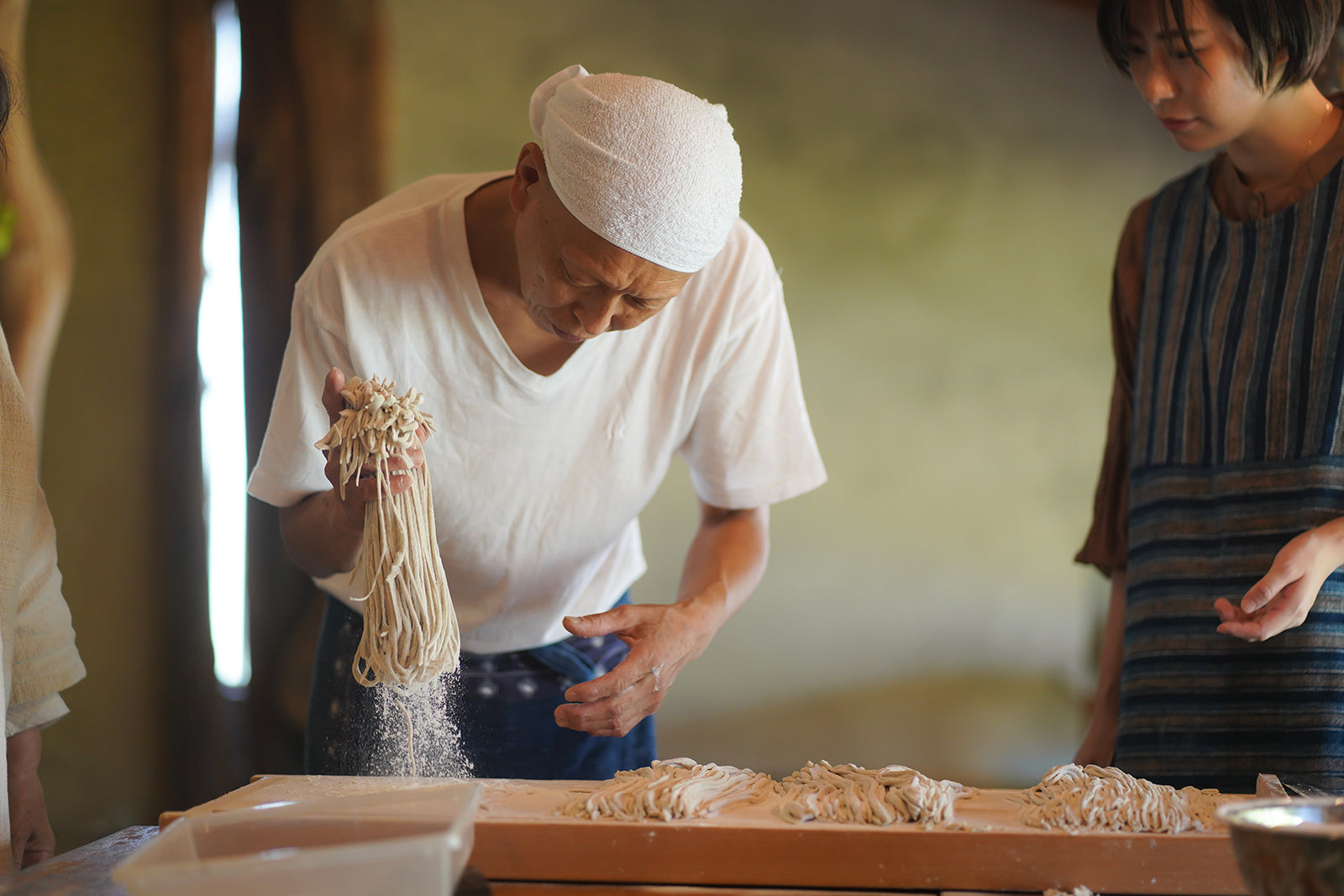
The tradition dates back to the Edo period, though its precise origins vary by account. What is consistent is that it has been part of Japanese New Year for centuries and shows no sign of changing. Some families make their soba from scratch on the 31st — the image of someone rolling and cutting fresh buckwheat noodles on New Year's Eve has its own particular quality.
What goes in the bowl
Toshikoshi soba is served hot in a dashi broth — typically a combination of kombu and katsuobushi, clear and deeply savory. Toppings vary by region and household: sliced green onions, a piece of kamaboko fish cake, a sheet of nori, sometimes a tempura prawn for a more celebratory bowl. The noodles themselves have a slightly nutty flavor from the buckwheat, with a texture that ranges from soft to pleasantly chewy depending on the ratio of flour and how they are made.
It is not a complicated dish. Most families have their version — the broth they have always made, the toppings that belong on it. The point is not novelty. The point is the repetition. This bowl, on this night, every year.
良いお年を
In the days before New Year's Eve, the greeting shifts. 良いお年を, yoi otoshi wo — have a good year. Said to neighbors, colleagues, the person at the shop you go to regularly. It is not a full sentence. It does not need to be. Everyone knows what it means: I hope the year ahead is kind to you.
You eat the soba just before midnight. The bowl crosses the year with you. And then it is January.

Leave a comment